Table of Contents
Introduction
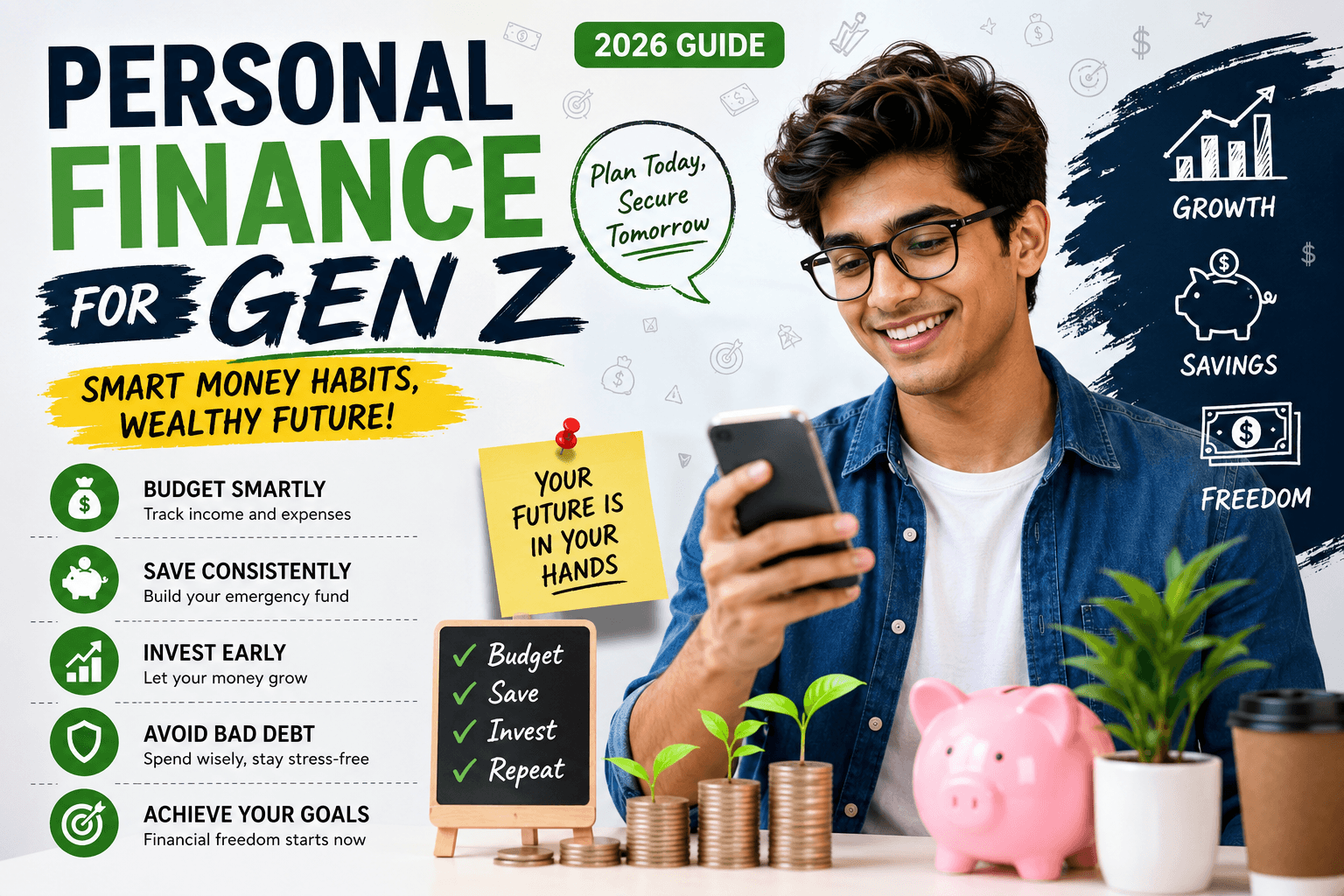
Managing money has never been more important—or more challenging—than it is today. Generation Z, born roughly between 1997 and 2012, has entered adulthood during a time of rapid technological change, rising living costs, digital banking, AI-powered financial tools, and countless investment opportunities. While previous generations relied on traditional banks and financial advisors, Gen Z has access to financial education through smartphones, apps, podcasts, YouTube channels, and social media.
However, this convenience comes with risks. Online shopping, subscription services, Buy Now Pay Later (BNPL) schemes, cryptocurrency hype, and financial misinformation can quickly lead to poor money habits. That’s why learning personal finance for Gen Z is one of the smartest investments you can make in yourself.
Financial freedom doesn’t depend on earning a huge salary. It comes from building healthy habits, spending wisely, saving consistently, and investing early. Whether you’re a college student, freelancer, content creator, entrepreneur, or starting your first full-time job, understanding how to manage money can help you reduce stress, avoid unnecessary debt, and create long-term wealth.
This comprehensive guide will walk you through budgeting, saving, investing, debt management, emergency funds, credit scores, insurance, AI-powered finance tools, and practical tips designed specifically for Gen Z in 2026.
Why Personal Finance Matters More Than Ever
Money affects almost every part of life. It determines where you live, how comfortably you can travel, whether you can pursue higher education, and how prepared you are for unexpected emergencies. Yet, many schools and colleges still don’t teach basic financial skills.
Developing strong financial habits early provides several benefits:
- Less financial stress
- Better decision-making
- More freedom to pursue career opportunities
- Earlier retirement possibilities
- Increased confidence in handling emergencies
One of the greatest advantages Gen Z has is time. Starting your financial journey in your early twenties gives your money decades to grow through the power of compound interest.
Understand Your Income
Before you can manage money effectively, you need to understand where it comes from.
Unlike previous generations, Gen Z often earns income from multiple sources instead of relying on one employer.
Common income streams include:
- Full-time employment
- Part-time work
- Freelancing
- Content creation
- Blogging
- YouTube monetization
- Affiliate marketing
- Graphic design
- Online tutoring
- Social media management
- Selling digital products
- AI-related services
- Stock photography
- E-commerce
Having multiple income streams creates greater financial security because you are less dependent on a single paycheck.
Create a Budget That Actually Works
Budgeting isn’t about restricting yourself. Instead, it’s about making intentional decisions with your money.
A simple and effective approach is the 50/30/20 budgeting rule.
50% – Needs
These are your essential expenses:
- Rent
- Groceries
- Transportation
- Utilities
- Internet
- Insurance
30% – Wants
These improve your lifestyle but aren’t essential.
Examples include:
- Shopping
- Restaurants
- Streaming subscriptions
- Travel
- Gaming
- Entertainment
20% – Savings and Investments
Use this portion to build your future by contributing to:
- Emergency fund
- Mutual funds
- ETFs
- Retirement accounts
- Stock investments
- Gold investments
If saving 20% isn’t possible initially, start with whatever amount you can. The habit matters more than the percentage.
Build an Emergency Fund
Unexpected expenses can happen at any time. A medical emergency, job loss, damaged laptop, or urgent home repair can disrupt your finances overnight.
An emergency fund protects you from relying on credit cards or high-interest loans during difficult times.
Aim to save enough money to cover three to six months of living expenses.
Keep this money in an easily accessible savings account where it remains safe and liquid.
Separate Needs from Wants
One of the biggest financial challenges facing Gen Z is impulse spending.
Social media constantly promotes new gadgets, fashion trends, vacations, and lifestyle upgrades.
Before making a purchase, ask yourself:
- Do I need this?
- Will I still want it in one month?
- Is this purchase helping my long-term goals?
Waiting 24 hours before making non-essential purchases can significantly reduce impulse spending.
Avoid Lifestyle Inflation
Many people increase their spending every time they receive a salary raise.
For example:
You receive a ₹10,000 salary increase.
Instead of saving more, you immediately upgrade your phone, buy designer clothing, subscribe to more services, or dine out more frequently.
A smarter approach is to save or invest at least half of every salary increase before increasing your lifestyle.
This simple habit can dramatically improve your financial future.
Good Debt vs Bad Debt
Not every loan is harmful.
Understanding the difference helps you make smarter financial decisions.
Good Debt
Good debt has the potential to increase your future income or wealth.
Examples include:
- Student loans
- Business loans
- Carefully planned home loans
Bad Debt
Bad debt finances purchases that quickly lose value.
Examples include:
- Credit card debt
- Payday loans
- Buy Now Pay Later misuse
- Personal loans for shopping
- High-interest consumer loans
Whenever possible, avoid borrowing money for depreciating items.
Learn How Credit Cards Work
Credit cards can be useful financial tools when used responsibly.
Benefits include:
- Building a strong credit history
- Cashback rewards
- Travel benefits
- Purchase protection
However, problems arise when users carry balances month after month.
Always:
- Pay the full balance before the due date.
- Never spend more than you can repay.
- Avoid cash withdrawals using credit cards.
- Keep credit utilization below 30%.
Responsible credit card usage strengthens your financial profile and improves your credit score.
Start Investing Early
Many young adults believe investing requires a large amount of money.
That’s no longer true.
Today, many investment platforms allow you to begin with small monthly contributions.
Popular investment options include:
- Index funds
- Exchange-Traded Funds (ETFs)
- Mutual funds
- Individual stocks
- Government bonds
- Gold ETFs
- Real Estate Investment Trusts (REITs)
The most important rule is consistency.
Invest regularly instead of trying to predict market highs and lows.
The Power of Compound Interest
Compound interest allows your money to earn returns on both your original investment and previous earnings.
Imagine investing ₹5,000 every month beginning at age 22.
Over several decades, your investments can grow substantially because your returns continue generating additional returns.
This is why financial experts consistently encourage people to start investing as early as possible.
The earlier you begin, the less money you’ll need to invest each month to achieve your long-term financial goals.
Build a Strong Credit Score
A credit score is one of the most important numbers in your financial life. It tells banks and lenders how responsibly you manage borrowed money. A good credit score can help you qualify for loans with lower interest rates, while a poor score can make borrowing more expensive or even lead to loan rejection.
Tips to Improve Your Credit Score
- Pay all credit card bills on time.
- Never miss EMI payments.
- Keep your credit utilization below 30%.
- Avoid applying for multiple credit cards in a short period.
- Regularly check your credit report for errors.
A strong credit score not only helps with personal loans but can also make it easier to get a home loan or car loan in the future.
Set SMART Financial Goals
Saving money without a purpose often leads to inconsistent habits. Instead, create clear financial goals using the SMART method:
- Specific: Save ₹1,00,000 for a car down payment.
- Measurable: Save ₹8,500 every month.
- Achievable: Ensure the goal fits your income.
- Relevant: Focus on goals that improve your financial future.
- Time-bound: Reach the target within 12 months.
Breaking large goals into smaller monthly milestones makes them easier to achieve.
Make Saving Automatic
One of the easiest ways to build wealth is to automate your savings. Instead of waiting until the end of the month to save what’s left, save first and spend the rest.
Ways to automate savings include:
- Automatic bank transfers
- Systematic Investment Plans (SIPs)
- Recurring deposits
- Automatic retirement contributions
This “pay yourself first” strategy removes the temptation to spend money before saving it.
Use AI-Powered Personal Finance Tools
Artificial Intelligence is changing how people manage money. Modern finance apps can analyze your spending, create budgets, track investments, and even suggest ways to save.
Popular AI-powered features include:
- Automatic expense categorization
- Personalized budget recommendations
- Investment tracking
- Bill payment reminders
- Spending alerts
- Savings goal tracking
- Fraud detection
While AI tools are useful, always verify financial advice before making major investment decisions.
Digital Banking Is the New Normal
Gen Z prefers banking through smartphones rather than visiting physical branches. Digital banking makes managing finances faster and more convenient.
Benefits include:
- Instant fund transfers
- Real-time account notifications
- UPI payments
- Mobile deposits
- Online investments
- Bill payments
- Expense tracking
However, always protect your accounts by using strong passwords, enabling two-factor authentication (2FA), and avoiding public Wi-Fi when accessing financial information.
Learn the Basics of Investing
Investing is one of the best ways to grow wealth over time. Instead of keeping all your money in a savings account, investing allows your money to work for you.
Common Investment Options
1. Mutual Funds
Managed by professional fund managers, mutual funds are ideal for beginners who want diversification without picking individual stocks.
2. Index Funds
These funds track market indices and usually have lower fees, making them a popular long-term investment choice.
3. Exchange-Traded Funds (ETFs)
ETFs combine the diversification of mutual funds with the flexibility of stock trading.
4. Stocks
Buying shares of individual companies offers higher growth potential but also carries greater risk.
5. Government Bonds
Suitable for conservative investors seeking stable returns with lower risk.
Remember: Diversification helps reduce investment risk.
Don’t Ignore Insurance
Many young adults think insurance is unnecessary because they’re healthy. Unfortunately, accidents and illnesses can happen unexpectedly.
Important types of insurance include:
- Health insurance
- Life insurance (for those with dependents)
- Vehicle insurance
- Travel insurance
- Gadget insurance (if appropriate)
Having insurance protects your savings from being wiped out by unexpected expenses.
Create Multiple Income Streams
Relying on one paycheck can be risky. Building additional income sources provides financial security and increases your savings potential.
Ideas include:
- Freelancing
- Blogging
- YouTube
- Affiliate marketing
- Selling digital products
- Online courses
- Graphic design
- Stock photography
- Social media consulting
- Print-on-demand stores
Even a small side income can make a significant difference over time.
Common Money Mistakes Gen Z Should Avoid
Many financial mistakes are preventable. Avoiding these common errors can save you thousands over the years.
1. Living Paycheck to Paycheck
Spend less than you earn and prioritize saving.
2. Ignoring an Emergency Fund
Unexpected expenses are inevitable. Be prepared.
3. Overspending on Credit Cards
Only charge what you can repay in full each month.
4. Following Social Media Trends
Don’t buy expensive products just because they’re trending.
5. Delaying Investments
Waiting for the “perfect time” often means missing years of compound growth.
6. Falling for Get-Rich-Quick Schemes
If something promises unrealistic returns with little effort, it’s likely a scam.
7. Not Tracking Expenses
Small daily purchases can quietly drain your budget. Use an app or spreadsheet to monitor your spending.
Build Good Financial Habits
Small habits repeated consistently create lasting financial success.
Develop habits such as:
- Reviewing your budget every month
- Tracking every expense
- Saving before spending
- Investing regularly
- Reading one personal finance book each month
- Increasing savings after every salary raise
- Avoiding impulse purchases
Financial discipline matters more than a high income.
Continue Learning About Money
The financial world changes rapidly. Stay informed by reading books, listening to podcasts, watching educational videos, and following trusted financial experts.
Topics worth exploring include:
- Tax planning
- Retirement investing
- Real estate
- Cryptocurrency risks
- Entrepreneurship
- Financial independence (FIRE)
- Estate planning
Continuous learning helps you make smarter financial decisions throughout your life.
Start Planning for Retirement Today
Retirement may seem decades away, but starting early is one of the smartest financial decisions you can make. Thanks to compound growth, even modest monthly investments made in your 20s can grow into a substantial retirement fund.
If you’re in India, consider long-term investment options such as:
- National Pension System (NPS)
- Public Provident Fund (PPF)
- Equity Mutual Funds through SIPs
- Exchange-Traded Funds (ETFs)
- Retirement-focused investment plans
The earlier you start, the less you’ll need to invest each month to reach your retirement goals.
Understand Financial Independence (FIRE)
The FIRE (Financial Independence, Retire Early) movement encourages people to save and invest aggressively so they can achieve financial freedom earlier than traditional retirement age.
Key principles include:
- Spend less than you earn.
- Increase your savings rate.
- Invest consistently.
- Avoid unnecessary debt.
- Build multiple income streams.
While retiring very early isn’t everyone’s goal, becoming financially independent gives you greater flexibility and peace of mind.
A Monthly Personal Finance Checklist
Review this checklist every month to stay on track:
- ✔ Track all income and expenses.
- ✔ Save at least 20% of your income (or as much as possible).
- ✔ Invest regularly through SIPs or other investments.
- ✔ Pay all bills and credit card dues on time.
- ✔ Review your emergency fund progress.
- ✔ Check your investment portfolio.
- ✔ Cancel subscriptions you no longer use.
- ✔ Set a financial goal for the next month.
Small, consistent actions can lead to significant financial progress over time.
Frequently Asked Questions (FAQs)
1. How much should Gen Z save every month?
A common recommendation is to save at least 20% of your income. If that’s not possible, start with 5–10% and gradually increase the amount as your income grows.
2. Is investing better than saving?
Both are important. Savings are ideal for short-term goals and emergencies, while investing helps grow wealth over the long term.
3. Can I start investing with a small amount?
Yes. Many investment platforms allow you to begin with small monthly contributions, making investing accessible even for beginners.
4. Should Gen Z use credit cards?
Credit cards can be useful if used responsibly. Always pay the full balance on time and avoid carrying high-interest debt.
5. What is the biggest financial mistake Gen Z makes?
Common mistakes include overspending, delaying investments, relying on debt for lifestyle purchases, and not maintaining an emergency fund.
Final Thoughts
Personal finance isn’t about becoming rich overnight—it’s about making informed decisions every day. By budgeting wisely, saving consistently, investing early, avoiding unnecessary debt, and continuing to learn, Gen Z can build a strong financial foundation for the future.
Technology has made managing money easier than ever, but the fundamentals remain the same: spend less than you earn, save regularly, invest for the long term, and prepare for unexpected expenses.
Remember, financial success is built through habits, not luck. Every small step you take today—whether it’s starting your first SIP, creating a budget, or building an emergency fund—brings you closer to financial freedom.
The best time to take control of your finances was yesterday. The second-best time is today.
FEditor’s Note (300 Words)
Personal finance has become one of the most essential life skills for Generation Z. With easy access to digital banking, AI-powered budgeting tools, online investing platforms, and endless financial content on social media, young adults have more opportunities than ever to build wealth. At the same time, they also face unique challenges such as rising living costs, subscription overload, online scams, impulse shopping, and misinformation about investing.
This guide was created to simplify personal finance for Gen Z by focusing on practical, actionable advice instead of complicated financial jargon. Whether you’re beginning your first job, studying in college, freelancing, or building your own business, the principles remain the same: budget wisely, save consistently, invest for the future, and protect yourself with an emergency fund and appropriate insurance.
Financial success doesn’t require a six-figure income. It requires discipline, patience, and consistency. Building good money habits in your twenties can significantly improve your financial security later in life.
Remember that personal finance is exactly that—personal. Your goals, income, lifestyle, and responsibilities will differ from someone else’s. Avoid comparing your financial journey with what you see on social media. Instead, focus on steady progress and informed decision-making.
We hope this guide empowers you to make smarter financial choices, avoid common pitfalls, and confidently work toward long-term financial independence. Keep learning, review your financial goals regularly, and remember that every smart decision you make today can have a lasting impact on your future.
No schema found.