Table of Contents
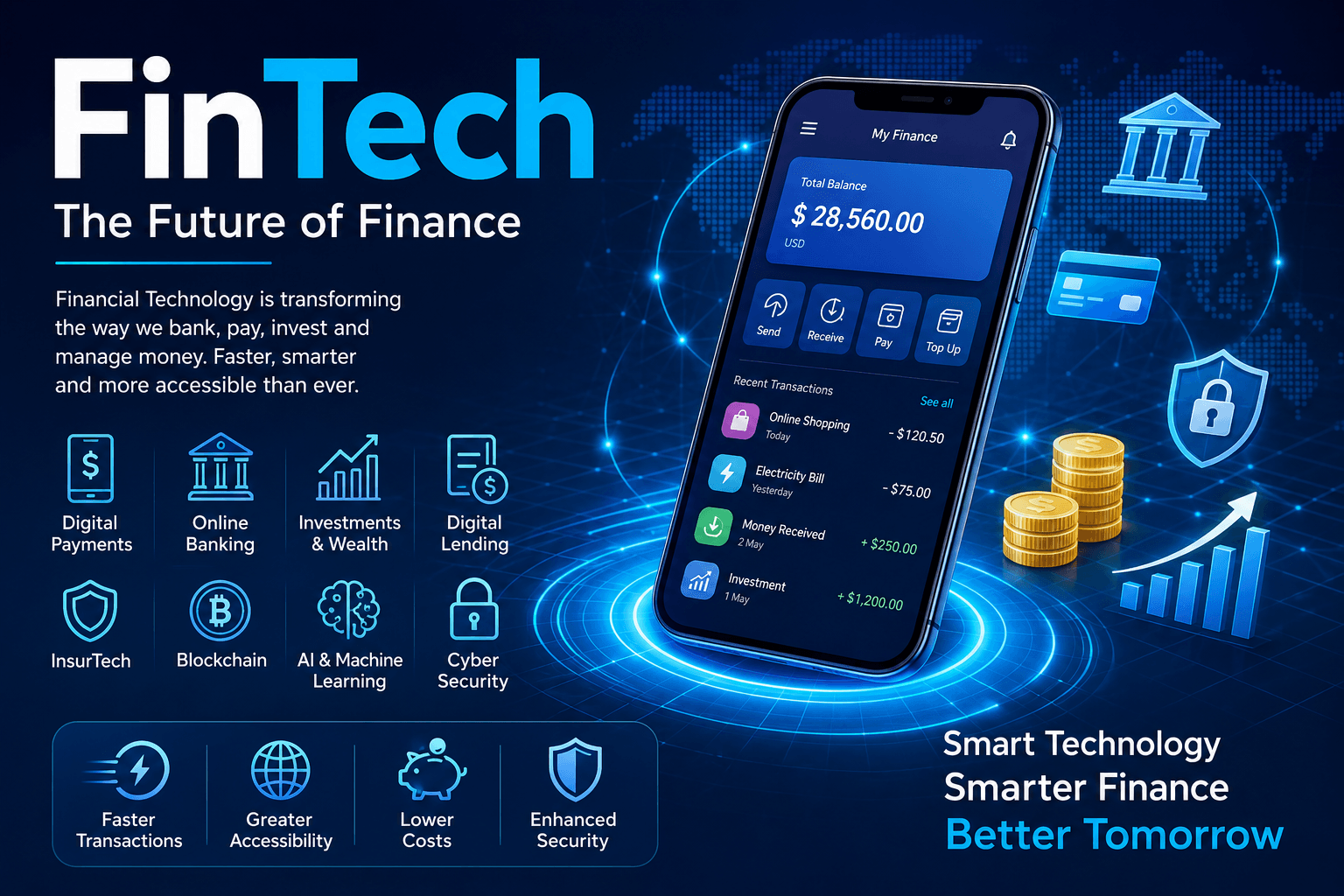
FinTech has become a global industry, with millions of people relying on digital financial services every day. In developed countries, consumers use mobile banking, contactless payments, and AI-powered investment platforms. In developing countries, FinTech is helping people access financial services for the first time.
One of the biggest success stories is digital payments. Consumers can now pay for groceries, utility bills, transportation, and online shopping using smartphones instead of cash. Businesses also benefit because digital payments reduce paperwork, speed up transactions, and improve customer satisfaction.
Digital lending has also grown rapidly. Instead of waiting days or weeks for a loan approval, many borrowers can now complete online verification and receive approval within hours. AI helps lenders evaluate applications more efficiently while reducing fraud.
Another important area is wealth management. Investment platforms now allow people to start investing with small amounts of money. Automated investment tools help beginners build diversified portfolios based on their financial goals and risk tolerance.
Insurance companies are also embracing technology. Customers can compare policies, purchase insurance online, file claims digitally, and receive updates through mobile apps. This saves time for both insurers and policyholders.
FinTech in India
India has emerged as one of the world’s fastest-growing FinTech markets. Affordable smartphones, widespread internet access, and digital payment infrastructure have accelerated adoption across the country.
Unified Payments Interface (UPI) has transformed how people send and receive money. Consumers can transfer funds instantly, pay merchants through QR codes, and complete transactions at any time without carrying cash.
Digital banking has expanded financial inclusion by allowing people in rural and underserved areas to access banking services through mobile devices. Small businesses also benefit from easier payment collection and digital bookkeeping.
Government initiatives supporting digital payments, financial inclusion, and digital identity have further strengthened the FinTech ecosystem. Startups continue to introduce innovative solutions in lending, insurance, wealth management, and business finance.
Advantages of FinTech
FinTech offers several benefits for individuals, businesses, and the economy:
- Faster financial transactions
- Lower operating and transaction costs
- Better accessibility for remote communities
- Improved customer experience
- Enhanced transparency
- Secure digital payment systems
- Automated financial management
- Easier investment opportunities
- Quick loan approvals
- Better financial inclusion
These advantages explain why FinTech adoption continues to increase globally.
Disadvantages of FinTech
Despite its many benefits, FinTech also presents challenges:
- Cybersecurity threats
- Data privacy concerns
- Dependence on internet connectivity
- Technical system failures
- Regulatory compliance challenges
- Increasing competition among providers
- Digital literacy gaps
- Risk of online fraud and phishing attacks
Consumers should use trusted financial platforms, enable multi-factor authentication, and stay informed about online security best practices.
Top FinTech Trends to Watch Through 2030
The next decade is expected to bring significant changes to financial technology.
Artificial intelligence will become even more advanced, providing personalized financial advice, automated investment management, and faster fraud detection.
Blockchain technology is likely to expand beyond cryptocurrencies into supply chain finance, identity verification, international payments, and digital contracts.
Embedded finance will allow consumers to access banking, insurance, and lending services directly within shopping apps, travel websites, and other digital platforms.
Open banking will encourage greater collaboration between banks and technology companies, giving customers more personalized financial products while maintaining secure data sharing.
Sustainable or “Green” FinTech will continue to grow, enabling consumers to invest in environmentally responsible businesses and projects.
Central Bank Digital Currencies (CBDCs) may also become more common as governments explore secure digital versions of national currencies.
Tips for Safely Using FinTech Services
To make the most of digital financial services while protecting your information:
- Use strong and unique passwords.
- Enable two-factor authentication whenever available.
- Download financial apps only from official app stores.
- Keep your devices and apps updated.
- Never share OTPs or banking passwords.
- Monitor your account statements regularly.
- Be cautious of phishing emails, calls, and messages.
- Use secure internet connections when making financial transactions.
These simple precautions can significantly reduce the risk of fraud.
Frequently Asked Questions (FAQs)
1. What is FinTech?
FinTech refers to the use of technology to improve and automate financial services such as banking, payments, investing, insurance, and lending.
2. Is FinTech safe?
Most reputable FinTech companies implement strong security measures such as encryption, biometric authentication, and fraud detection. However, users should also follow good cybersecurity practices.
3. How does FinTech help consumers?
It makes financial services faster, more convenient, more affordable, and accessible through digital platforms.
4. What technologies power FinTech?
Artificial intelligence, machine learning, blockchain, cloud computing, big data analytics, APIs, and biometric authentication are among the key technologies.
5. Can FinTech replace traditional banks?
Rather than completely replacing banks, FinTech often complements them by improving digital services and customer experiences.
6. What are digital wallets?
Digital wallets store payment information electronically, allowing users to make purchases and transfer money using smartphones or other devices.
7. Why is cybersecurity important in FinTech?
Financial platforms handle sensitive personal and financial data, making strong security essential to prevent fraud and data breaches.
8. Is FinTech creating jobs?
Yes. The industry continues to generate demand for software developers, data scientists, cybersecurity professionals, product managers, compliance experts, and financial analysts.
9. How does AI improve FinTech?
AI enables fraud detection, personalized recommendations, customer support automation, and faster credit assessments.
10. What is the future of FinTech?
The future includes smarter AI, wider adoption of blockchain, embedded finance, open banking, digital currencies, and increasingly personalized financial services.
Conclusion
Financial technology has transformed the global financial system by making banking, payments, investing, insurance, and lending faster, smarter, and more accessible. As technology continues to evolve, FinTech will remain one of the most influential industries driving economic growth and financial inclusion.
For consumers, FinTech offers convenience, speed, and greater control over personal finances. For businesses, it improves operational efficiency, customer satisfaction, and access to innovative financial solutions. Although challenges such as cybersecurity and regulatory compliance remain, continuous innovation is helping the industry overcome these obstacles.
Looking toward 2030 and beyond, artificial intelligence, blockchain, embedded finance, and digital currencies are expected to redefine the financial landscape even further. Whether you are an individual managing your finances, an entrepreneur building a business, or an investor exploring new opportunities, understanding FinTech will help you thrive in an increasingly digital economy.
The Role of Artificial Intelligence (AI) in FinTech
Artificial Intelligence (AI) is one of the biggest driving forces behind the success of FinTech. AI enables financial companies to process large amounts of data, identify patterns, and make smart decisions in seconds. Instead of relying only on human employees, many financial institutions now use AI-powered systems to improve efficiency and customer experience.
One of the most common examples is AI chatbots. These virtual assistants answer customer questions 24/7, helping users check account balances, make payments, or resolve issues without waiting for a customer service representative.
AI is also transforming investment management. Robo-advisors use algorithms to recommend investment portfolios based on an individual’s financial goals, income, and risk tolerance. This makes investing more accessible, especially for beginners.
Fraud detection is another major application of AI. Modern systems monitor millions of transactions in real time and identify suspicious activities instantly. If an unusual transaction is detected, the system can alert the customer or temporarily block the transaction until it is verified.
Blockchain Technology in FinTech
Blockchain has become one of the most innovative technologies in financial services. It is a decentralized digital ledger that securely records transactions across multiple computers. Once information is recorded, it is extremely difficult to alter, making blockchain highly secure and transparent.
The technology is widely known for powering cryptocurrencies such as Bitcoin and Ethereum, but its applications extend far beyond digital currencies.
Financial institutions are exploring blockchain for:
- Cross-border money transfers
- Smart contracts
- Identity verification
- Digital asset management
- Trade finance
- Supply chain financing
Because blockchain reduces the need for intermediaries, transactions can often be completed more quickly and at a lower cost.
Cybersecurity in FinTech
As financial services become increasingly digital, protecting customer data has become a top priority. Cybercriminals constantly attempt to steal financial information through phishing attacks, malware, ransomware, and identity theft.
To combat these threats, FinTech companies invest heavily in cybersecurity technologies.
Common security measures include:
- End-to-end encryption
- Multi-factor authentication (MFA)
- Biometric authentication such as fingerprint or facial recognition
- AI-powered fraud detection
- Secure cloud infrastructure
- Real-time transaction monitoring
Consumers also play an important role in protecting their accounts by using strong passwords, enabling two-factor authentication, and avoiding suspicious emails or links.
FinTech in India
India has become one of the world’s fastest-growing FinTech markets. The combination of affordable smartphones, widespread internet access, and supportive government initiatives has accelerated digital financial adoption across the country.
One of the biggest milestones has been the growth of the Unified Payments Interface (UPI). Millions of people now use UPI every day to transfer money instantly, pay merchants through QR codes, and complete online purchases.
Digital banking has also expanded financial inclusion. People in rural areas can now access banking services without visiting a physical branch. Small businesses benefit from digital payment systems that simplify bookkeeping and improve cash flow.
The Indian FinTech ecosystem continues to grow rapidly, with startups introducing innovative solutions in digital lending, insurance, wealth management, and business finance.
Challenges Facing the FinTech Industry
Despite its impressive growth, FinTech companies face several important challenges.
Regulatory Compliance
Financial regulations vary across countries, requiring companies to comply with complex legal requirements. Meeting these standards is essential for maintaining trust and operating legally.
Data Privacy
Financial platforms collect large amounts of personal information. Protecting this data is critical, as breaches can damage customer trust and lead to legal consequences.
Cybersecurity Risks
Hackers continually develop new methods to target financial systems. Companies must regularly update their security measures to stay ahead of emerging threats.
Digital Literacy
Although FinTech services are expanding, not everyone is familiar with digital financial tools. Education and awareness are needed to help more people use these services safely and confidently.
Competition
The FinTech industry is highly competitive. Traditional banks, startups, and technology companies are all developing innovative financial products, making continuous innovation essential.
Future Trends in FinTech
The future of FinTech looks promising, with several technologies expected to shape the industry over the next decade.
Artificial Intelligence
AI will continue to automate customer service, improve fraud detection, and provide personalized financial advice.
Embedded Finance
Financial services such as payments, insurance, and lending will become integrated directly into shopping apps, travel websites, and other digital platforms.
Open Banking
Open banking will enable customers to securely share financial data with approved providers, encouraging greater innovation and competition.
Green FinTech
Sustainable financial products and environmentally responsible investment platforms are expected to become increasingly popular.
Central Bank Digital Currencies (CBDCs)
Many governments are exploring digital versions of their national currencies to improve payment systems and financial efficiency.
Real-World Applications of FinTech
Today, FinTech is used in almost every aspect of personal and business finance.
Consumers use FinTech to:
- Transfer money instantly
- Pay utility bills
- Shop online
- Invest in stocks and mutual funds
- Purchase insurance
- Track expenses
- Apply for loans
Businesses use FinTech to:
- Accept digital payments
- Automate payroll
- Manage accounting
- Detect fraud
- Access working capital
- Improve customer experience
The widespread adoption of these technologies demonstrates how deeply FinTech has become integrated into everyday life.
Advantages of FinTech
FinTech has revolutionized the financial industry by making services more accessible, efficient, and user-friendly. Here are some of its biggest advantages:
1. Faster Transactions
Digital payments and online banking enable users to transfer money, pay bills, and complete financial transactions within seconds.
2. Lower Costs
Because many FinTech companies operate primarily online, they have lower operating expenses. These savings are often passed on to customers through reduced fees and competitive pricing.
3. Greater Financial Inclusion
Millions of people who previously had limited access to banking services can now manage their finances using a smartphone and an internet connection.
4. Better Customer Experience
Modern FinTech apps provide intuitive interfaces, instant notifications, budgeting tools, and personalized financial insights.
5. Improved Security
Advanced technologies such as encryption, biometric authentication, and artificial intelligence help protect customer accounts from fraud and cyberattacks.
6. 24/7 Accessibility
Unlike traditional bank branches, most FinTech platforms are available around the clock, allowing users to access financial services whenever they need them.
Disadvantages of FinTech
Despite its many benefits, FinTech also presents certain challenges.
Cybersecurity Risks
As financial services become increasingly digital, cybercriminals continue developing sophisticated attacks targeting financial platforms.
Dependence on Technology
Internet outages, server failures, or software bugs can temporarily disrupt access to financial services.
Data Privacy Concerns
FinTech companies collect significant amounts of personal and financial information, making strong privacy protections essential.
Regulatory Challenges
Governments continue updating regulations to keep pace with rapidly evolving financial technologies, creating compliance challenges for companies.
Digital Literacy
Some users, particularly older adults or those with limited digital experience, may find it difficult to use advanced financial applications.
Career Opportunities in FinTech
FinTech has become one of the fastest-growing employment sectors worldwide. As digital financial services continue expanding, demand for skilled professionals is increasing.
Popular career options include:
- FinTech Software Developer
- Mobile App Developer
- Data Scientist
- Artificial Intelligence Engineer
- Blockchain Developer
- Cybersecurity Specialist
- Financial Analyst
- Product Manager
- Digital Payments Specialist
- Compliance Officer
- UX/UI Designer
- Cloud Computing Engineer
Professionals with expertise in both finance and technology are especially valuable in today’s job market.
Tips for Using FinTech Safely
To protect your finances while using digital financial services, follow these best practices:
- Use strong and unique passwords for every financial account.
- Enable two-factor authentication (2FA).
- Never share OTPs, PINs, or banking passwords.
- Download financial apps only from official app stores.
- Keep your devices and applications updated.
- Avoid using public Wi-Fi for banking transactions.
- Review account statements regularly for suspicious activity.
- Be cautious of phishing emails, fake websites, and fraudulent phone calls.
Practicing good cybersecurity habits significantly reduces the risk of financial fraud.
The Future of FinTech
The future of FinTech is expected to be driven by continuous innovation.
Artificial intelligence will provide increasingly personalized financial advice and automate routine banking tasks.
Blockchain technology will improve transparency, security, and efficiency across financial services beyond cryptocurrencies.
Embedded finance will allow consumers to access financial products directly within shopping platforms, travel apps, and other digital ecosystems.
Open banking will encourage collaboration between financial institutions and technology companies, creating more innovative financial products.
Central Bank Digital Currencies (CBDCs) may redefine how governments issue and manage national currencies.
Sustainable or Green FinTech will continue to grow as consumers seek environmentally responsible investment opportunities.
Together, these innovations will make financial services smarter, faster, safer, and more accessible.
Frequently Asked Questions (FAQs)
1. What is FinTech?
FinTech refers to the use of technology to improve financial services such as banking, payments, lending, insurance, and investing.
2. Is FinTech safe?
Yes, reputable FinTech companies use encryption, biometric authentication, and fraud detection systems. Users should also follow cybersecurity best practices.
3. How does FinTech benefit consumers?
It offers faster transactions, lower costs, greater convenience, and easier access to financial products.
4. What technologies power FinTech?
Artificial intelligence, blockchain, cloud computing, big data analytics, APIs, and biometric authentication.
5. Can FinTech replace traditional banks?
Rather than replacing banks completely, FinTech complements traditional banking by improving digital services and customer experiences.
6. What are digital wallets?
Digital wallets securely store payment information and allow users to make purchases or transfer money electronically.
7. Why is cybersecurity important in FinTech?
Financial platforms handle sensitive customer data, making strong cybersecurity essential to prevent fraud and data breaches.
8. Is FinTech creating jobs?
Yes. The industry’s rapid growth has created opportunities in software development, cybersecurity, AI, data science, compliance, and financial analysis.
9. How does AI improve FinTech?
AI helps detect fraud, automate customer support, assess creditworthiness, and provide personalized financial recommendations.
10. What is the future of FinTech?
The future includes AI-driven banking, blockchain expansion, embedded finance, open banking, digital currencies, and sustainable financial technologies.
Conclusion
Financial technology has transformed the global financial landscape by making banking, payments, investing, insurance, and lending faster, smarter, and more accessible. Today, consumers can manage nearly every aspect of their finances using smartphones and digital platforms.
For businesses, FinTech improves efficiency, reduces operational costs, enhances customer experiences, and creates new growth opportunities. Governments are also embracing digital finance to promote financial inclusion and modernize payment systems.
Although challenges such as cybersecurity, regulation, and data privacy remain, continuous innovation is helping the industry address these concerns. Technologies like artificial intelligence, blockchain, cloud computing, and embedded finance are expected to shape the next generation of financial services.
Whether you are an individual looking to manage your money more effectively, an entrepreneur seeking innovative business solutions, or a student considering a career in finance and technology, understanding FinTech is becoming increasingly important. As the world moves toward a more digital economy, FinTech will continue to play a central role in improving financial access, efficiency, and innovation.
FinTech is not just changing how we use money—it is redefining the future of finance itself.